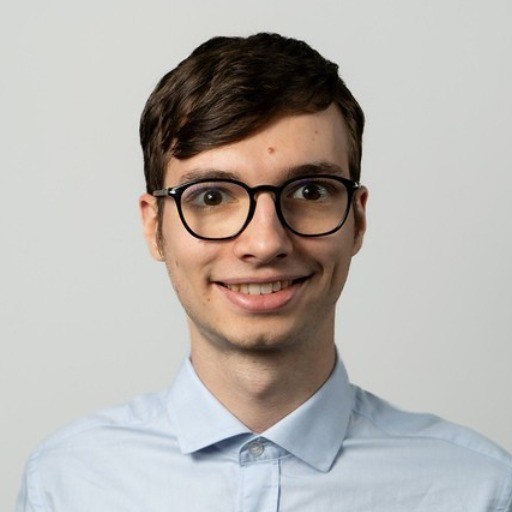
Research Focus
I am a PhD student in Biomedical Informatics at Columbia University, advised by Professor Matthew B. A. McDermott. My research develops scalable methods for methodological discovery in machine learning: identifying which design choices produce real performance gains, where those gains generalize across tasks and datasets, and how efficiently that evidence can be established.
Motivated by increasingly automated AI R&D and, ultimately, self-improving AI, I study how experiments can produce reliable, reusable knowledge to guide what to build next. I work primarily in Health AI, using sparse, irregular longitudinal event-stream data, while developing methods intended to generalize to other temporal domains such as finance.
Trained as a software engineer and computer scientist, and working within a medical school, I combine statistical methodology, experimental design, and software infrastructure with an understanding of event-stream data.
Education
Clinical Informatics Track. Primary advisor: Matthew B. A. McDermott.
MA in Biomedical Informatics, graduated February 2026 (GPA 4.06).
Coursework and reading groups: Machine Learning for Healthcare; Advanced Machine Learning for Healthcare and Medicine; Symbolic Artificial Intelligence; Acculturation to Medicine & Clinical Informatics; LLM and Electronic Health Record Foundation Models Reading Groups.
Mathematics, Vision and Learning; joint degree with Mines Paris PSL. Graduated with Highest Honors.
Coursework: Convex Optimization, Computational Statistics, Machine Learning for Time Series, Geometrical Data Analysis.
Major in Computer Science. Coursework: Machine Learning, Databases, Software Engineering.
Publications
Peer-Reviewed Publications
-
Privacy Audits for Clinical Large Language Models
MLHC 2026 -
PLayer-FL: A Principled Approach to Personalized Layer-wise Cross-Silo Federated Learning
MLSys 2026
Preprints
-
Rethinking How We Evaluate Methodological Progress in Health AI
arXiv:2609.18134 (2026); under review at ML4H 2026 -
A Clinically Meaningful Foundation Model Evaluation for Structured Electronic Health Records
arXiv:2505.16941 (2026); under review at Journal of Biomedical Informatics*Equal contribution. -
Clinical Translation of Ultrasoft Fleuron™ Probes for Stable, High-Density, and Bidirectional Brain Interfaces
medRxiv 2025.04.24.25326126 (2025)
Conference Abstracts
-
Avalanches in 2D granular media
APS March Meeting Abstract (2023)
Research Experience
- Efficient and scalable evaluation for automated AI R&D (McDermott Health AI Lab): Studying how to make evaluation more efficient across large spaces of prediction tasks. Current work examines when relative algorithm comparisons from inexpensive generated tasks transfer to clinically meaningful tasks and new datasets.
- EHR foundation model benchmarking (Joshi Lab): Co-developed a multi-task evaluation of supervised baselines and EHR foundation models across clinical tasks and datasets, including settings with scarce labels.
- Privacy of clinical LLMs (Gürsoy & Elhadad Labs): Developed Verified Extraction, a privacy-auditing framework combining extraction attacks with membership verification to measure leakage of patient identifiers under realistic attacker constraints (MLHC 2026).
- Personalized federated learning (Gürsoy Lab): Co-developed and evaluated PLayer-FL, combining shared and institution-specific model layers across tabular, imaging, and clinical-text settings (MLSys 2026).
- Analyzed 5 million experimental images using deep learning (PyTorch, Mask R-CNN).
- Implemented molecular dynamics simulations of phase transitions in C++.
- Presented results at the SES Annual Meeting (2022) and APS March Meeting (2023).
- Awarded an Erasmus+ Scholarship from the European Commission.
Industry & Engineering Experience
- Built data acquisition and analysis pipelines for high-density neural recordings using SpikeInterface.
- Used biophysical simulations to evaluate deep-clustering methods for spike sorting when experimental ground truth was unavailable.
- Applied these evaluations to characterize recording performance and inform neural-probe design.
Developed microgrid optimization algorithms (PuLP/MILP) and electric load forecasting models.
Led a 6-person team designing a gesture-controlled IoT glove. Technologies: Arduino BLE, Raspberry Pi, Home Assistant.
Selected Open-Source Contributions
Teaching & Mentoring
- TA for BINF G4002: Machine Learning for Healthcare; guest lecture on model evaluation (Spring 2026).
- TA for BINF G4001: Introduction to Computational Biomedicine and Health (Fall 2025).
- Led the 2024–2025 LLM Reading Group and developed hands-on materials on Transformers, BERT, Llama, fine-tuning, benchmarking, and evaluation.
Co-led an introductory workshop on version control and collaborative Git/GitHub workflows.
Academic Service
Peer Reviewing
NeurIPS 2025 (Learning from Time Series for Health Workshop); RECOMB 2026; ISMB 2026; SD4H at ICML 2026 (Structured Data for Health); ML4H 2026.
Conference Presentations
MLHC (Baltimore, 2026); MLSys (Bellevue, 2026); AI at VP&S Workshop (Columbia University, 2025); APS March Meeting (Las Vegas, 2023); SES Annual Meeting (Texas A&M, 2022).
Conference Service
Volunteer at the OHDSI 2024 Global Symposium (New Brunswick, NJ).
Community
Columbia University Life Ambassador: organizing events across all schools and campuses (36,000 students). Student Representative for the Columbia DBMI department.
Technical Skills
- Programming
- Python (advanced), C/C++ (advanced), R, SQL, OCaml, TypeScript
- AI Tools
- Claude Code, OpenAI Codex
- ML/NLP
- PyTorch, Hugging Face (Transformers, Accelerate, PEFT), scikit-learn, Weights & Biases
- Infrastructure
- SLURM HPC, Docker, Git/GitHub Actions, LaTeX